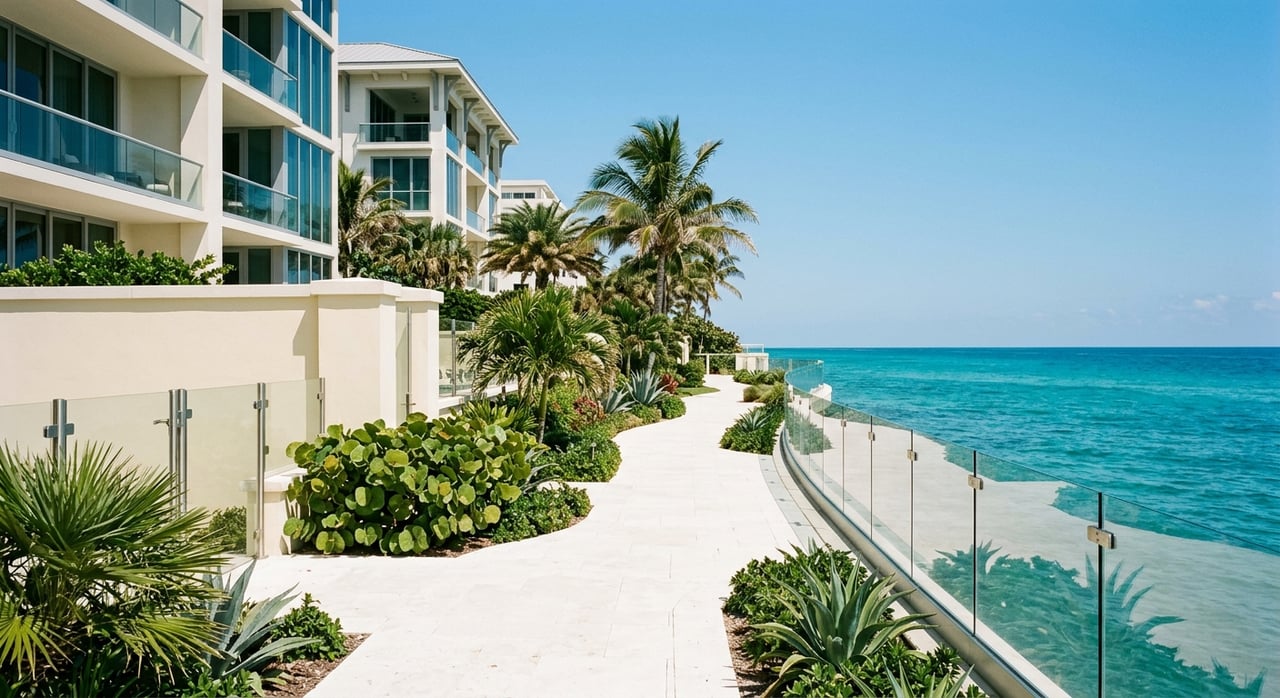
If you are thinking about a condo in Sunny Isles Beach as a long-term hold, the view alone should not drive the decision. This is a small, water-bound market with global appeal, a cash-heavy buyer base, and major differences from one building to the next. If you want to hold well over time, you need to look past the skyline and focus on supply, reserves, inspections, and exit strategy. Let’s dive in.
Why Sunny Isles Beach stands out
Sunny Isles Beach is a compact barrier-island city in northeast Miami-Dade County, bounded by the Atlantic Ocean and the Intracoastal Waterway. The city estimates a population of 22,903, and its residential profile is notably international, with 65.7% of residents foreign-born and 73.4% speaking a language other than English at home. For you as a buyer, that matters because this is not just a local condo market. It is a globally oriented one.
That global orientation shows up in the numbers. In Q1 2026, Sunny Isles Beach condo and townhome sales totaled 161 closings, including 117 cash sales, with 1,128 active listings and 21.2 months of supply. MIAMI Realtors also ranked Sunny Isles Beach No. 14 among the largest vacation-home markets in the U.S., with about $1.1 billion in sales volume and roughly 90% all-cash transactions in that analysis.
The headline takeaway is simple: Sunny Isles Beach can support a long-term hold thesis, but it is highly selective. Broad city averages only tell part of the story, because your result will depend far more on the specific building, line, and association than on the ZIP code alone.
Long-term hold starts with scarcity
One reason Sunny Isles Beach attracts long-term buyers is limited land supply. At just 1.78 square miles and bounded by water on both sides, the city offers real geographic scarcity. That can help support long-run value, especially in buildings with strong positioning and lasting appeal.
Still, scarcity by itself is not enough. In this market, building quality and financial discipline can matter more than branding. The spread between the Q1 2026 median condo and townhome sale price of $465,000 and the average sale price of $1.37 million points to a market with very different asset classes under one city name.
That pricing split is important for your hold strategy. It suggests that not all condos in Sunny Isles Beach behave the same way. A well-run tower with strong reserves may perform very differently from a nearby building facing capital work or fee pressure.
The buyer pool shapes your exit
A long-term hold is not just about buying well. It is also about understanding who may buy from you later. In Sunny Isles Beach, the resale market often leans heavily toward cash buyers, vacation-home buyers, and international purchasers.
That changes how you should think about liquidity. A condo that appeals to this buyer profile may have a stronger exit path than a unit that depends mainly on financed end users. In a selective market, broad desirability is less important than matching your unit to the most active demand pool.
This is especially relevant in a market with elevated supply. MIAMI Realtors reported 21.2 months of supply in Q1 2026, and the market also showed 111 days to contract. That means pricing discipline matters, and your future resale may take longer if the building or unit is out of step with buyer expectations.
Oceanfront towers: scarcity with higher scrutiny
Best fit for longer holds
Oceanfront luxury towers are often the purest long-term wealth-preservation play in Sunny Isles Beach. They offer the strongest scarcity story, direct water access, and the kind of prestige that can continue to attract global capital over time. In Q1 2026, MIAMI Realtors set Sunny Isles Beach’s luxury threshold at $4.5 million and its ultra-luxury threshold at $8.0 million, which confirms the city’s position in Miami-Dade’s upper tier.
If you are buying oceanfront, it often makes sense to think in longer cycles. These assets can take more patience on both entry and exit because the buyer pool is narrower and more selective. In return, you may benefit from a product type that is hard to replicate in a land-constrained coastal market.
Watch fees, reserves, and capital planning
Oceanfront towers also tend to have the highest carrying-cost pressure. Full-service operations, larger physical plants, and coastal exposure can make association expenses and reserve planning especially important. For a long-term hold, this means the quality of the association may matter as much as the view itself.
Florida law now requires tighter reserve funding and structural compliance for many larger condos. Because of that, a luxury tower with weak planning can become far more expensive to own than its finishes or branding first suggest. If you are underwriting a long hold, the cleanest building financials may be more valuable than the flashiest amenities.
Bayfront residences: a middle path
Bayfront and Intracoastal residences often offer a useful balance. You still get water adjacency and a prestige address, but usually at a lower entry point than direct oceanfront. For many long-term buyers, that can create a more efficient blend of scarcity, lifestyle appeal, and carrying cost.
This category may suit you if you want a premium waterfront setting without stretching into the most fee-intensive tower class. Sunny Isles Beach is bounded by water on both sides, so bayfront product can still tell a compelling location story. The key is to confirm that the building is financially healthy and not approaching major capital work that could disrupt your hold economics.
Non-waterfront condos: lower basis, sharper underwriting
Non-waterfront or land-adjacent towers can be the most cost-sensitive entry point in Sunny Isles Beach. If your priority is lower basis, portfolio diversification, or stronger cash-flow potential, these buildings may deserve attention. They can also offer more flexibility if you want exposure to the market without paying a full view premium.
But this category usually requires even more discipline. Without direct water frontage or a major view premium, the building’s financial health, leasing rules, and maintenance history become even more central. In a supply-heavy market, these units may also need sharper pricing on resale to stay competitive.
The building matters more than the brochure
Recertification timing can change the deal
In Sunny Isles Beach, building condition is not a side issue. The city says buildings generally must undergo recertification at 30 years of age and every 10 years after that. For coastal condominium and cooperative buildings three stories or taller built on or after 1998, recertification starts at 25 years and then repeats every 10 years, with reports due within 90 days of notice.
For you, that means timing matters. Two similar units in different buildings can have very different risk profiles depending on where each building sits in its recertification cycle. A building nearing a major deadline may carry different near-term costs than one that recently completed required work.
Milestone inspections and reserve studies
Florida also requires milestone inspections for certain condominium and cooperative buildings three stories or higher, generally at 30 years and then every 10 years after that. In addition, many residential condominiums three stories or higher must complete a structural integrity reserve study at least every 10 years.
Those reserve studies cover major items such as the roof, structure, fire protection systems, plumbing, electrical systems, waterproofing and exterior painting, windows and exterior doors, and other qualifying components. The practical takeaway is that reserve health is no longer a nice extra. It is a core part of condo ownership and long-term hold planning.
Contract disclosures raise the standard
Florida condo contracts now require buyers to receive the current milestone-inspection summary and the association’s most recent structural integrity reserve study, when applicable, before the contract is executed. That puts building diligence front and center. If you are serious about a long-term hold, these documents are part of the asset itself.
This is also why citywide averages can mislead. A tower with a clear capital plan, healthy reserves, and transparent reporting may justify a stronger hold thesis than a newer-looking building with weaker governance. In this market, the association’s paperwork can tell you as much as the unit tour.
How to think about hold horizons
There is no single rule for every buyer, but some patterns are useful. Oceanfront luxury towers often deserve the longest hold horizon because you are buying scarcity, service intensity, and a narrower cash-buyer audience. Bayfront residences often fit a medium-term horizon because they can balance view value and ownership cost more efficiently.
Non-waterfront condos may offer the most flexibility on entry and exit, but only if the building is financially disciplined and the unit is well priced for a competitive market. In every category, the strongest long-term hold is often the building with the cleanest governance, not the one with the newest lobby or the loudest marketing.
A practical Sunny Isles Beach checklist
Before you move forward with a long-term hold strategy in Sunny Isles Beach, focus on a few core questions:
- When is the building’s next recertification or milestone-related deadline?
- Has the association completed its structural integrity reserve study, if required?
- Are reserves fully funded for major components?
- Is there any known or likely special assessment exposure?
- How do monthly fees compare with the building’s service level and capital condition?
- Does the unit type match the cash-heavy and globally oriented buyer pool that drives this market?
- If you needed to exit in a supply-heavy period, would the unit still be competitive?
These questions can help you separate a beautiful condo from a durable asset. In Sunny Isles Beach, that distinction matters.
If you want to build a long-term hold strategy here, the opportunity is real, but it is building-specific. Oceanfront towers offer rarity and prestige, bayfront residences can provide a smart middle ground, and non-waterfront units may create a lower-basis path into the market. The common thread is disciplined due diligence, especially around reserves, inspections, and association governance.
For buyers and investors who value careful analysis, local market perspective, and discreet guidance in South Florida’s coastal condo markets, Lydia Eskenazi offers a confidential, consultative approach tailored to your goals.
FAQs
What makes Sunny Isles Beach condos different for long-term holds?
- Sunny Isles Beach is a small barrier-island market with limited land, a highly international ownership profile, and a cash-heavy buyer base, so building quality and association strength often matter more than citywide averages.
What should you review before buying a Sunny Isles Beach condo to hold long term?
- You should review recertification timing, milestone-inspection status, structural integrity reserve study documents, reserve funding, monthly fees, and any potential special assessment exposure.
Are oceanfront Sunny Isles Beach condos always the best hold strategy?
- Not always. Oceanfront units offer the strongest scarcity story, but they can also carry higher fees and more sensitivity to reserve planning and building-level capital needs.
How does high inventory affect a Sunny Isles Beach condo exit?
- In Q1 2026, Sunny Isles Beach had 21.2 months of supply, which points to a selective market where overpricing can lengthen your resale timeline.
Why do reserves matter so much for Florida condo holds?
- Florida law requires structural integrity reserve studies for many larger residential condominiums and tighter reserve discipline, which makes the association’s financial planning a major part of long-term ownership risk.
Are bayfront and non-waterfront Sunny Isles Beach condos worth considering?
- Yes. Bayfront residences can offer a balance of water adjacency and lower entry cost than oceanfront, while non-waterfront condos may provide a lower basis if the building’s finances, maintenance history, and resale position are strong.