Choosing between a waterfront condo and a single-family home on Key Biscayne is not just a style decision. It shapes how much privacy you have, how much maintenance you take on, and how much control you want over your property. If you are weighing both options, this guide will help you sort through the practical trade-offs so you can make a smarter, more confident decision. Let’s dive in.
Why Key Biscayne Feels Different
Key Biscayne has a unique setting that influences how waterfront living works. It is a barrier island with one land access route, the Rickenbacker Causeway, and much of the lifestyle is tied to shared coastal amenities rather than one private parcel alone.
That matters because both condo owners and single-family homeowners can enjoy strong access to the water and outdoor recreation. Crandon Park includes a marina with a 24-hour boat ramp, slips, fuel, moorings, trailer storage, and services for vessels up to 80 feet. The Village park system also includes Beach Park, which offers resident-only waterfront access by key fob, while Bill Baggs Cape Florida State Park and Crandon Park add more public beach, paddling, fishing, and recreation options.
In other words, the Key Biscayne decision is often less about getting to the waterfront and more about how you want to live on it. The real question is whether you want convenience and shared management, or autonomy and direct control.
Condo Living on Key Biscayne
A waterfront condo can be an excellent fit if you want a more streamlined ownership experience. For many buyers, especially seasonal owners or those splitting time between cities, the appeal is simple: less day-to-day upkeep and more centralized management.
Under Florida condominium law, common-element operation, maintenance, repair, replacement, and protection fall within the association framework. Depending on the condo documents, maintenance of certain limited common elements may be handled either by the association or by the unit owner who uses them.
This structure can make ownership feel more predictable, but it also comes with governance. Associations have rights of access to units during reasonable hours when maintenance or repairs are needed, and buyers are stepping into a building's rules, financial posture, and maintenance plan.
What Condo Buyers Should Review
Florida resale disclosure rules require important building documents before closing. These can give you a clearer picture of the health and obligations of the property.
You should expect to review:
- The declaration
- Articles and bylaws
- Rules and regulations
- Annual financial statement
- Annual budget
- Milestone-inspection summary, when applicable
- Most recent structural integrity reserve study, when applicable
For many Key Biscayne condo buyers, these documents matter as much as the view. They help you understand not only the residence itself, but also the building behind it.
When a Condo May Be the Better Fit
A condo may suit you best if your priorities include ease and flexibility. This is often true for buyers looking for a lock-and-leave residence, a seasonal home, or a waterfront property with less hands-on oversight.
A condo may be a strong match if you:
- Want less personal responsibility for exterior and common-area upkeep
- Prefer shared amenities and professionally managed maintenance
- Are comfortable with association rules and governance
- Are willing to review budgets, reserves, and inspection-related disclosures carefully
Single-Family Waterfront Living on Key Biscayne
A single-family waterfront home offers a different kind of value. In most cases, it gives you more privacy, more control over the site, and more freedom to shape the property over time.
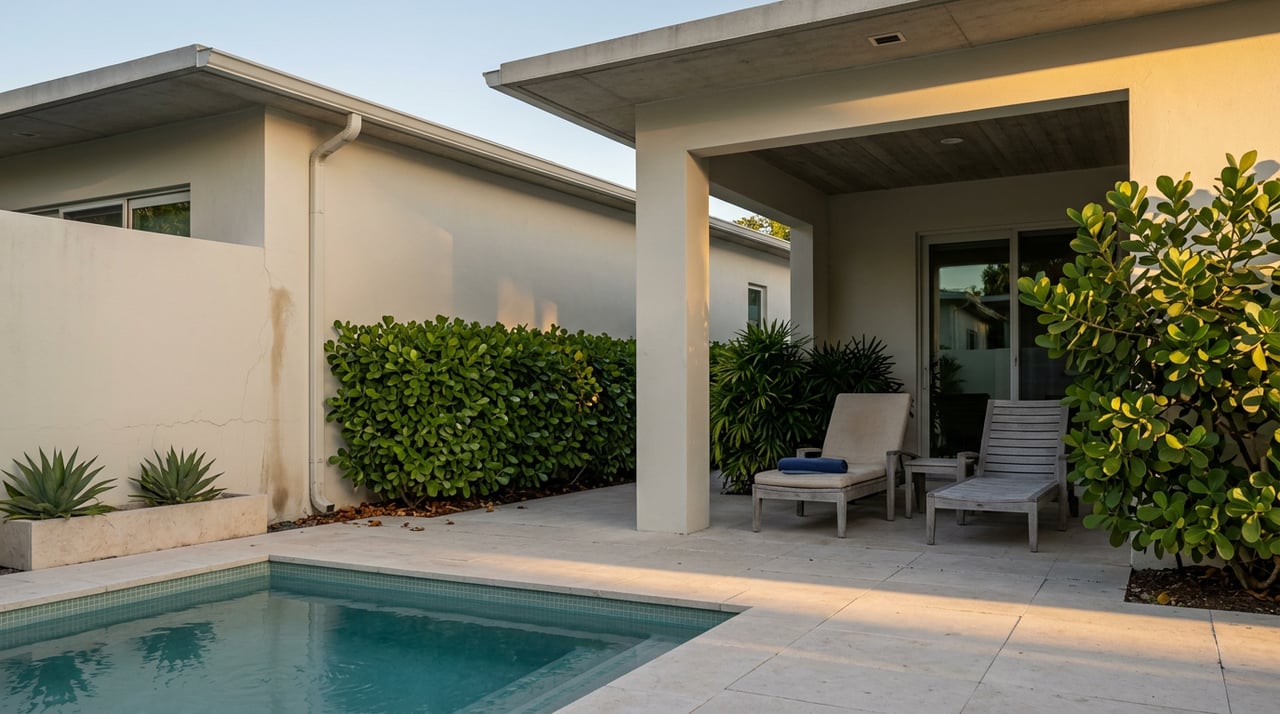
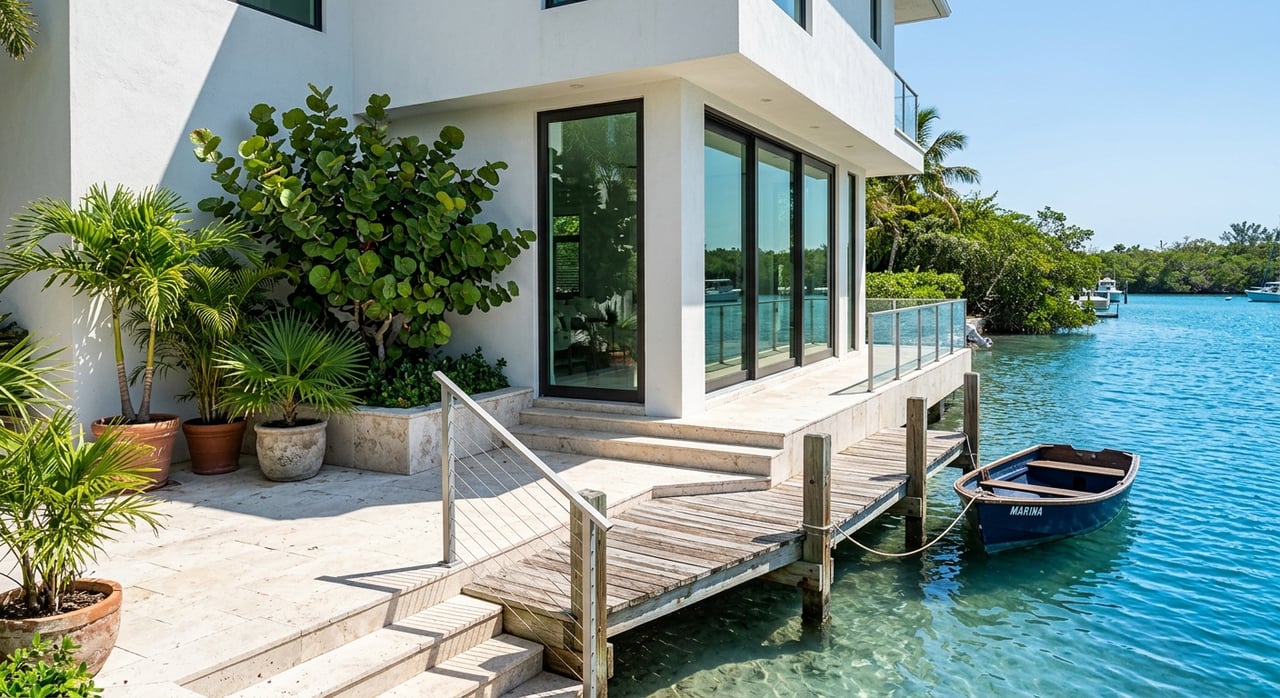
That can be especially appealing if you want features such as a private dock, yard, pool, or a more customized outdoor experience. You are generally making more of the decisions directly, rather than through a shared governance structure.
That added control comes with added responsibility. Waterfront ownership is usually the more hands-on path, especially when exterior improvements or shoreline features are involved.
What More Control Really Means
If you are drawn to a private dock or boating setup, it is important to understand that waterfront improvements still involve permitting. Florida DEP provides self-certification for some single-family dock projects, including certain new docks, dock repairs or replacements, and adding a boat lift.
That does not make the process automatic, but it does show how single-family ownership can better support a more individualized waterfront lifestyle. If boating is central to how you plan to use the property, a house may offer the flexibility you want.
When a Single-Family Home May Be Better
A house may be the better choice if privacy and customization rank high on your list. It can also be the right fit if you are comfortable managing more ongoing decisions tied to the property.
A single-family waterfront home may be a strong match if you:
- Want more privacy and separation from neighboring residences
- Value a yard, pool, or other private outdoor space
- Need or strongly prefer private dock or boat-lift potential
- Want more direct control over renovations and improvements
- Are comfortable with the upkeep and permitting that waterfront ownership can require
Condo Due Diligence Has Changed
On Key Biscayne, condo due diligence is especially important because many buildings may be subject to Florida’s updated reserve and inspection requirements. For buyers, this is not a small detail. It can affect both costs and long-term ownership planning.
A residential condominium association must complete a structural integrity reserve study at least every 10 years for each building that is three habitable stories or higher. The study covers major components such as the roof, structure, fire protection, plumbing, electrical systems, waterproofing, windows, and exterior doors.
Florida’s milestone-inspection law also applies to many condominium and cooperative buildings that are three stories or higher. By contrast, it does not apply to single-family, two-family, three-family, or four-family dwellings with three or fewer habitable stories above ground.
For you as a buyer, that means a waterfront condo is partly a building-level decision. You will want to know whether reserves are funded, what inspection reports show, and whether future special assessments appear likely.
House Due Diligence Is More Site-Specific
With a waterfront house, the due diligence shifts. Instead of focusing on association reserves and building-wide inspections, you are looking more closely at the individual site and its waterfront features.
Flood exposure is a major part of that review. FEMA states that homeowners insurance generally does not cover flood damage and that flood coverage is separate under the National Flood Insurance Program.
For a Key Biscayne waterfront home, that makes a few issues especially important:
- Flood mapping
- Flood insurance cost
- Condition of docks and waterfront improvements
- Ongoing maintenance needs tied to the shoreline or site
This is where a more tailored, property-by-property review becomes essential. No two waterfront homes carry exactly the same profile.
Questions to Ask Before You Decide
If you are still torn between a condo and a house, a few honest questions can help clarify the right direction. The goal is not just to buy well, but to choose a lifestyle that fits how you actually plan to live.
Ask yourself:
- Will you use the property full-time, seasonally, or from abroad?
- Is boating a core part of your lifestyle?
- Do you need a private dock, or would marina access be enough?
- How much upkeep do you want to manage yourself?
- Do you prefer building amenities and convenience, or privacy and customization?
- Are you comfortable reviewing condo budgets, reserve studies, and inspection disclosures?
Your answers will often point more clearly to one option than the other. In many cases, the right choice becomes obvious once you define your ownership style.
The Bottom Line for Key Biscayne Buyers
Both waterfront condos and single-family homes can work beautifully on Key Biscayne. The island’s blend of public and resident-oriented waterfront amenities means you do not have to own every feature privately to enjoy the lifestyle.
A condo often makes more sense if you want convenience, a more centralized maintenance structure, and a residence that is easier to leave and return to. A single-family home tends to make more sense if you want privacy, direct control, and a more boat-oriented or customized property experience.
The smartest decision comes down to your priorities, your tolerance for oversight, and how you want your waterfront life to function day to day. That is where experienced, local guidance can make all the difference.
If you are considering a waterfront purchase on Key Biscayne and want a discreet, highly personalized discussion about which property type best fits your goals, connect with Lydia Eskenazi.
FAQs
Should you buy a waterfront condo on Key Biscayne for seasonal use?
- A waterfront condo can be a strong option for seasonal use if you want a lock-and-leave property with more centralized maintenance and shared upkeep.
What should you review before buying a Key Biscayne condo?
- You should review the declaration, articles, bylaws, rules, annual financial statement, annual budget, and, when applicable, the milestone-inspection summary and structural integrity reserve study.
Why might a Key Biscayne single-family home suit boaters better?
- A single-family waterfront home may offer more flexibility for private dock or boat-lift plans, although waterfront improvements still require the appropriate permitting review.
Do Key Biscayne waterfront houses and condos have the same inspection concerns?
- No. Condo due diligence often centers on association reserves and building inspection requirements, while house due diligence is usually more site-specific, including flood exposure and the condition of waterfront improvements.
Does homeowners insurance usually cover flood damage for a Key Biscayne waterfront house?
- No. FEMA states that homeowners insurance generally does not cover flood damage, so separate flood coverage is an important part of waterfront-home due diligence.